

Pinellas County Sheriff Bob Gualtieri on Wednesday defended law enforcement’s use of automated license plate recognition technology, saying the systems are an important crime-fighting tool while acknowledging that safeguards are needed to prevent improper access and misuse.
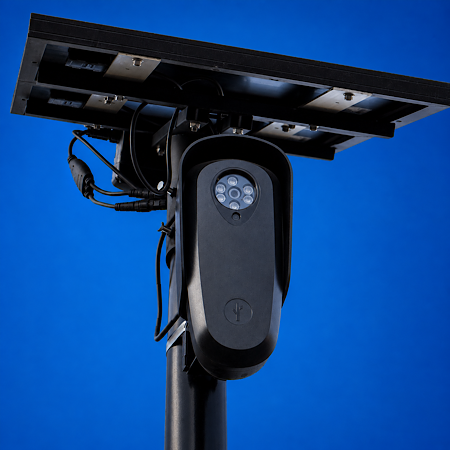
During a press conference, Gualtieri addressed growing concerns surrounding automated license plate recognition, commonly known as ALPR. Systems from companies including Flock, Axon and Motorola photograph license plates and vehicles as they pass cameras in public locations.
The Pinellas County Sheriff’s Office has used ALPR technology since 2006.
Gualtieri said law enforcement agencies use license plate reader data to locate missing and endangered people, recover stolen vehicles, identify vehicles associated with violent crimes, apprehend fugitives and assist in investigations involving kidnapping, human trafficking and drug trafficking.
He said concerns about misuse are legitimate but argued that public discussions about the technology have also included misinformation about what the systems actually do.
“Disagreement is fine when it’s based on accurate facts,” Gualtieri said, while adding that legitimate concerns should be addressed through safeguards and accountability without eliminating law enforcement access to the technology.
According to Gualtieri, ALPR cameras take still photographs of publicly displayed license plates and vehicles visible from public places. The systems record the location and time of each photograph.
He emphasized that the cameras do not continuously record video, are motion activated, and are not used for traffic enforcement. Motorists cannot receive traffic citations from an ALPR camera, he said.
Gualtieri also disputed characterizations of ALPR systems as continuously tracking individual people or vehicles. He said ALPR identifies vehicles rather than the occupants and does not establish who was driving or riding inside a vehicle when a photograph was taken.
Other investigative work is necessary to determine whether a particular person was associated with the vehicle at the time.
Gualtieri compared ALPR photographs with what a person could photograph using a cellphone while standing along a public roadway. He said the technology essentially automates license plate checks officers have historically performed manually through law enforcement databases.
The sheriff also cited crime statistics from the agency’s service area as evidence of technology’s value in law enforcement.
Gualtieri said serious crime within the Sheriff’s Office service area has fallen by more than 64% during the past decade. He said 529 stolen vehicles were reported in the agency’s service area in 2015, compared with 230 in 2025, a decrease of about 56%.
“We live in a technological age, which means we cannot fight crime in the Stone Age,” Gualtieri said.
The sheriff also addressed concerns about collecting and sharing historical license plate information.
He said Florida law makes information captured by license plate recognition systems confidential and restricts its release or distribution except for authorized law enforcement purposes. He also said contracts with ALPR providers specify that law enforcement agencies own their data and control its release.
Gualtieri argued that retaining historical ALPR information can become important when crimes are not immediately reported or when suspects are identified weeks or months after an offense.
He pointed to sexual assaults, homicides, missing children and people with dementia as examples where investigators may need to review previously captured license plate information or share information across jurisdictional lines.
Gualtieri also detailed two recent criminal investigations in which he said ALPR technology played a significant role.
In one case, two armed suspects reportedly robbed a Pinellas County business near U.S. 19 and Ulmerton Road on Sunday night. The suspects allegedly entered the business wearing ski masks and placed a firearm against the owner’s forehead while demanding money.
Surveillance video from another business showed the suspects leaving in a black Kia, but the video did not capture the vehicle’s license plate.
Investigators determined the same suspects were believed to have committed two additional robberies in Tampa. Detectives reviewed ALPR information and identified the Kia’s license plate.
A lookout was entered into the system, and an officer in Daytona Beach later located and stopped the vehicle.
Gualtieri said officers recovered an AR-15, multiple other firearms and property belonging to the robbery victim. The suspects were taken into custody. He cited the case as an example of why agencies need the ability to share ALPR information across jurisdictional boundaries.
Gualtieri also discussed a June 5 homicide in Pinellas Park in which a man was shot in the head and killed.
Investigators had information that the killer fled on a motorcycle but initially did not have a suspect.
According to Gualtieri, investigators reviewed ALPR records from around the area and time of the homicide and identified the license plate of a possible suspect motorcycle. Investigators subsequently determined that the registered owner was associated with the victim.
Additional investigative work ultimately established probable cause to arrest a suspect for first-degree murder, Gualtieri said.
He also argued that ALPR information can reduce unnecessary police encounters.
Gualtieri gave the example of an armed robbery where investigators only know that suspects fled in a particular make and color of vehicle. Without more specific identifying information, officers could potentially stop numerous similar vehicles near the crime scene.
If an ALPR camera captures the actual license plate associated with the suspect vehicle, he said, investigators can narrow their search and avoid stopping unrelated motorists.
Despite his strong defense of the technology, Gualtieri acknowledged instances around the country in which law enforcement personnel have improperly searched ALPR databases for personal reasons, including searches involving former romantic partners.
“There are times when some cops violate policies, and they break the law,” Gualtieri said.
He said officers who misuse the systems should face discipline, termination and, when appropriate, criminal charges.
Gualtieri said he supports additional regulation governing law enforcement use of ALPR technology.
Among the safeguards he endorsed are requirements that every agency using ALPR maintain a written policy, that personnel receive training and that access be restricted to legitimate law enforcement and public safety purposes.
He said policies should prohibit officers from using ALPR systems to identify vehicles associated with constitutionally protected activities, including protests and other First Amendment events, unless authorities are investigating a legitimate public safety threat related to the event.
Gualtieri also proposed requiring officers conducting an ALPR search to enter an official agency case number and document the law enforcement reason for the search.
He said agencies should retain that information so they can conduct audits.
Agencies should also routinely audit ALPR systems for inappropriate searches and impose meaningful discipline for violations, including termination when warranted. Gualtieri said he supports laws establishing criminal penalties for intentional misuse.
Additional regulations should set appropriate data retention periods and require ALPR information to be protected like other sensitive criminal justice information, according to the sheriff.
Gualtieri said the Sheriff’s Office intends to continue using automated license plate recognition technology while complying with existing law and working with policymakers on additional protections.
“As technology evolves, law enforcement is committed to evaluating and strengthening the safeguards governing ALPR use,” Gualtieri said.
He said the goal should be to address legitimate privacy and accountability concerns while preserving what he described as an important public safety and investigative tool.